

Discover Near Me
The Saturday morning problem
There is a particular kind of wasted morning where you know perfectly well that something is on this weekend, somewhere within half an hour of your front door, and you cannot find out what it is.
The information exists. It is just scattered across a council listings page, four ticketing sites, a dozen venue websites, two Facebook groups and a poster in a pub window. Checking all of them takes longer than the thing you were trying to go to.
Discover Near Me is the one place I wanted. You give it a postcode, and it tells you what is on near you.
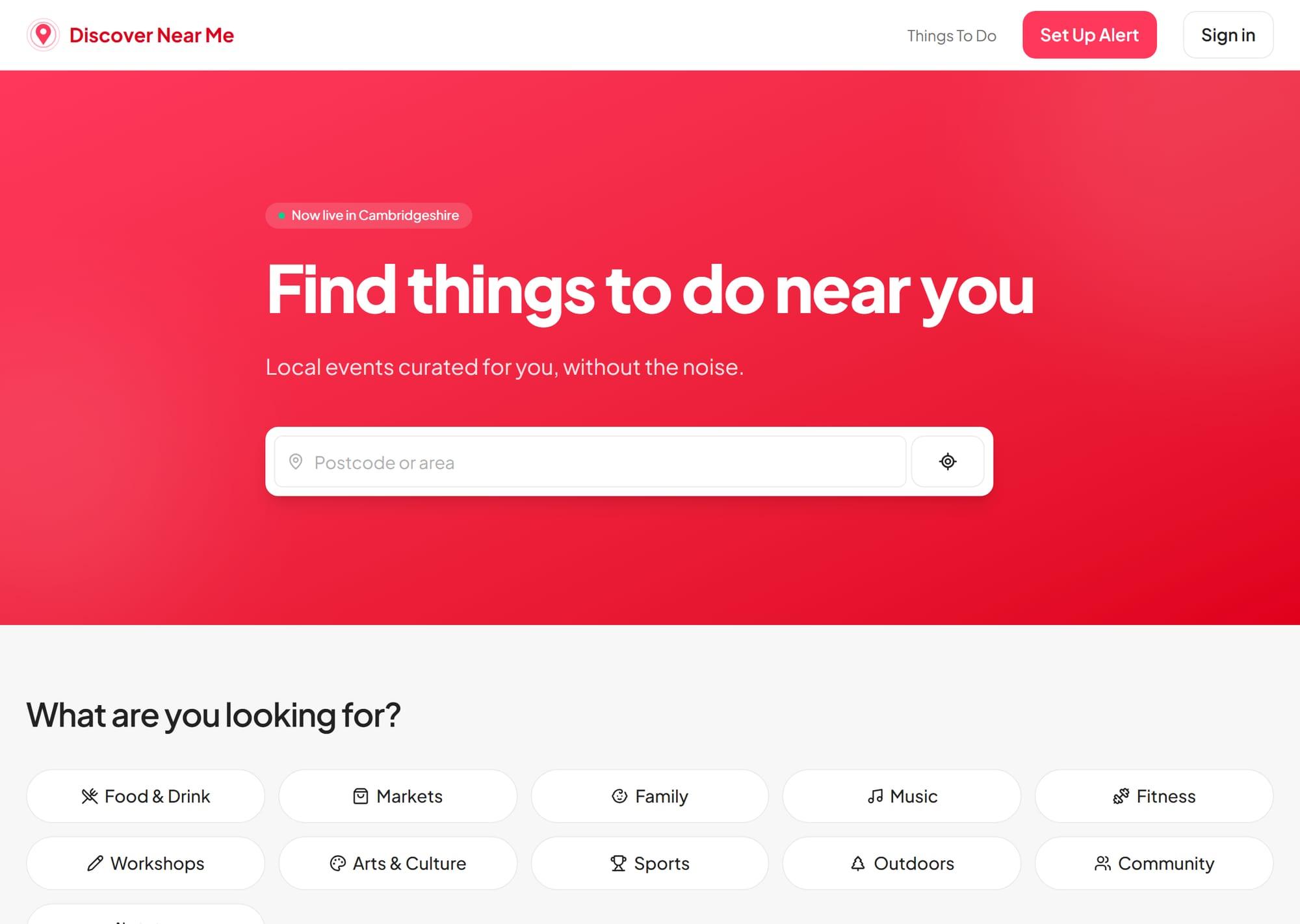
The first screen asks one question. Enter a postcode, or tap use my location once, and you go straight to the results. You can start without creating an account.
Near you means near you, not near the nearest city
Events here are not grouped by city. The thing nearest to you is frequently in a different town, and a city page would not show it.
So the unit here is a radius, not a place. Pick a distance and the results sort themselves again around where you are standing.
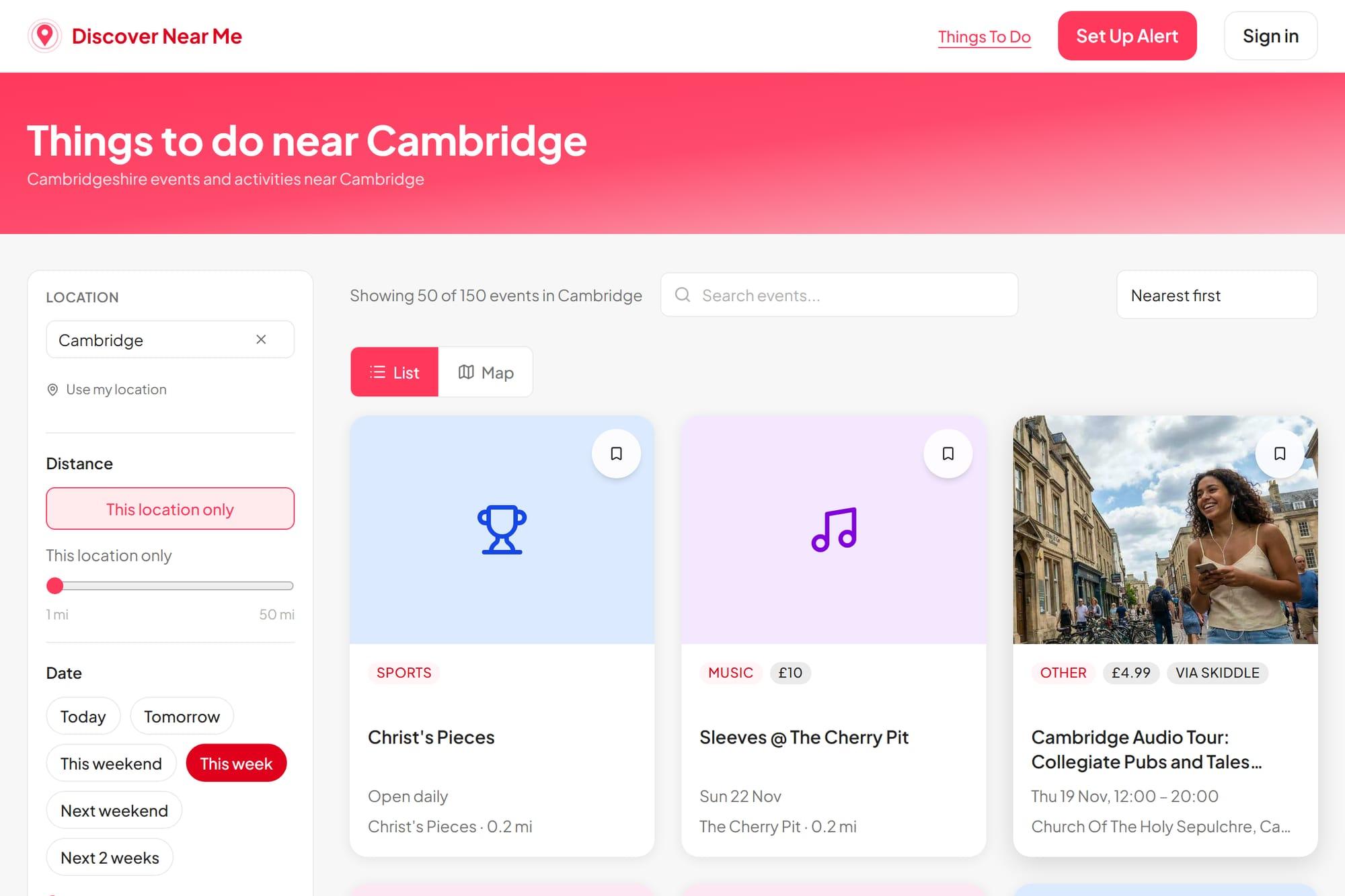
The filters are the ones people actually decide with, rather than the ones that are easy to build: this weekend, free, under a fiver, good for children, good for dogs, indoors if it is raining. Each filter shows its own count before you apply it, so you can see there is no point filtering to markets today before you have wasted the click.
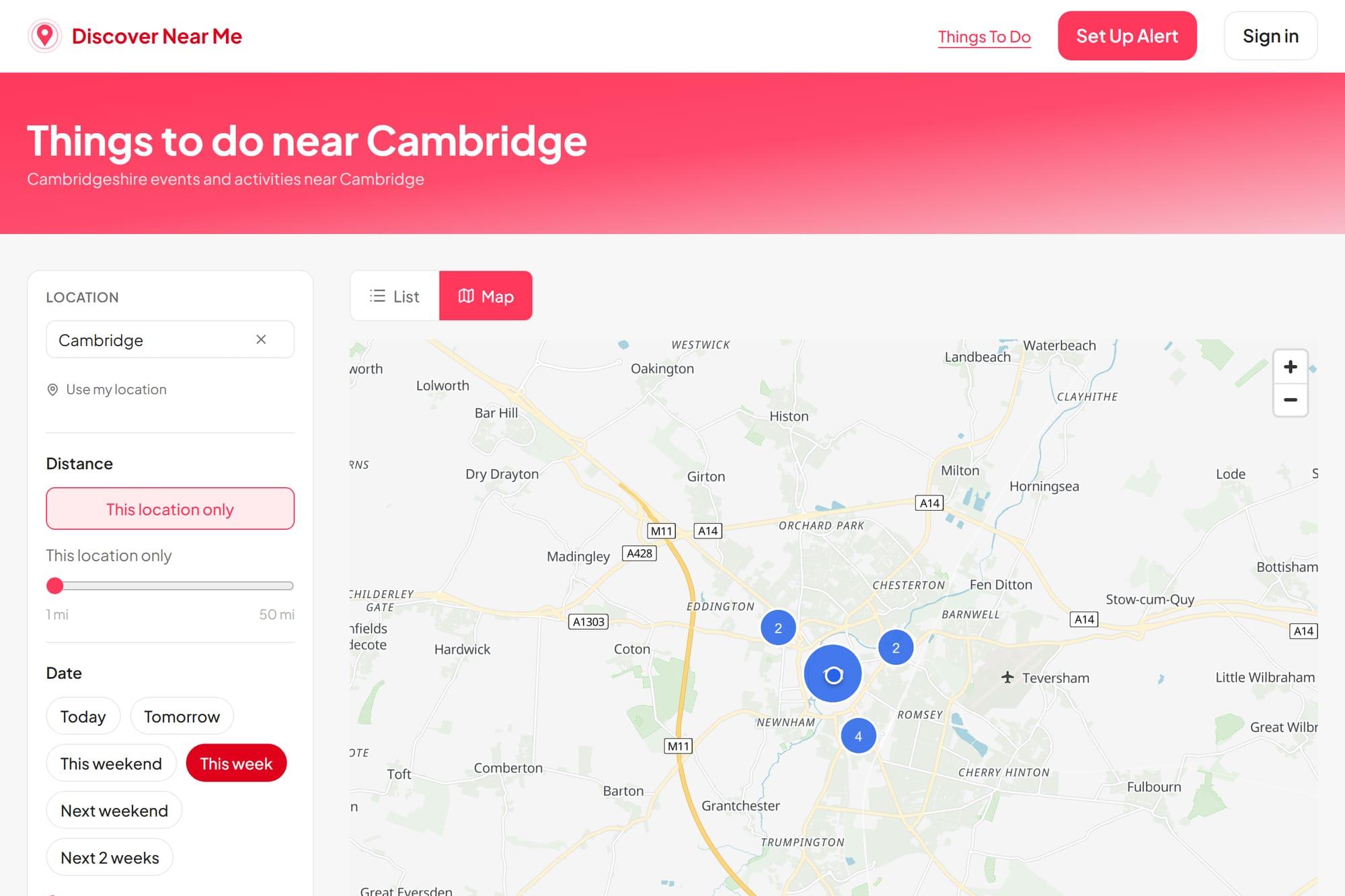
And because "what's within twenty minutes" is a spatial question, the same results draw on a map.
Telling you where it came from
A listing is only useful if you can trust it. Nobody wants to drive to a craft fair that was cancelled in 2023 and never taken down.
So each event page says where its information came from and when it was last confirmed, and it is honest about what it does not know.
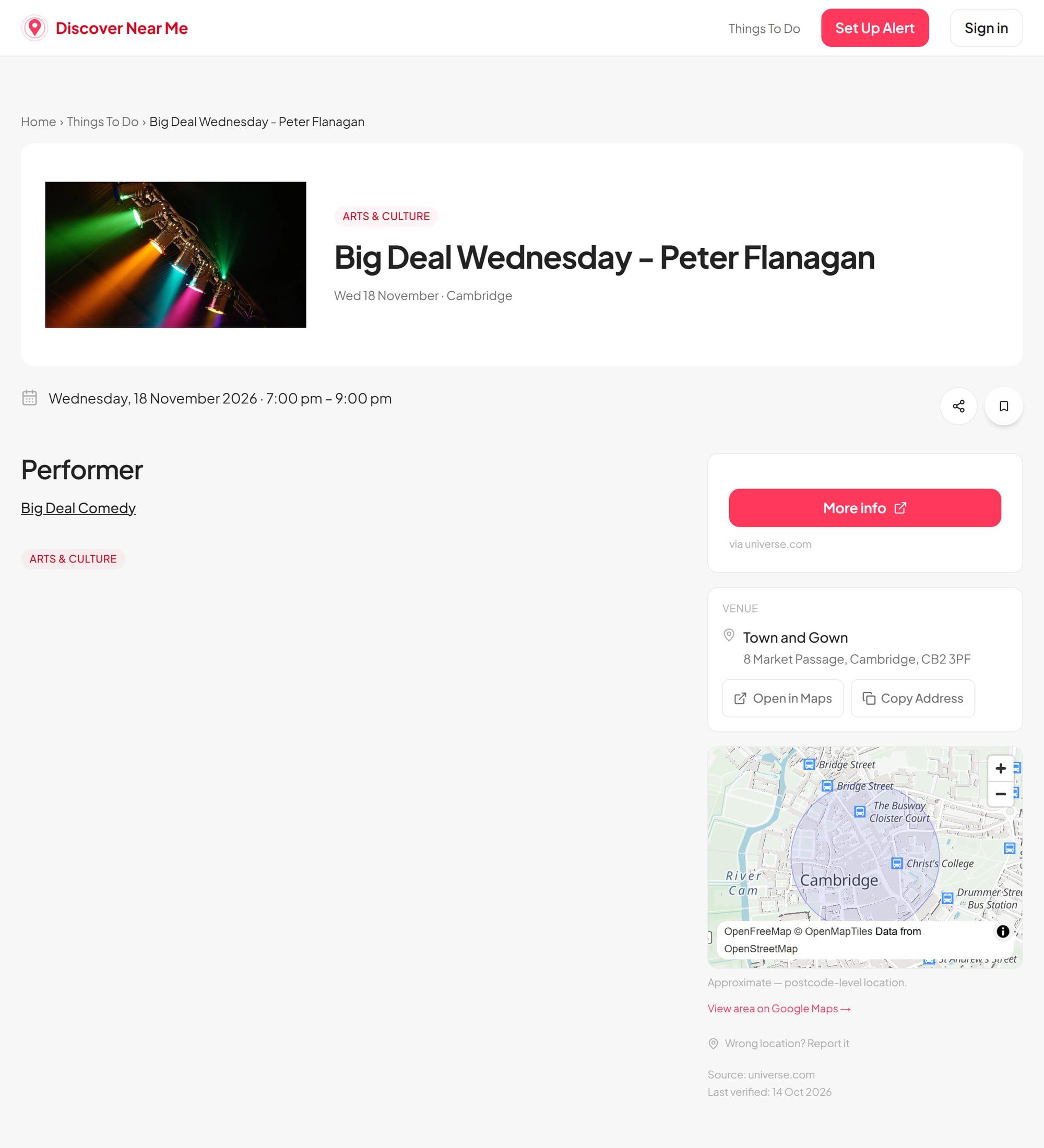
Where the location is only known to postcode level, the page says so rather than dropping a confident pin in the wrong field. Every page has a wrong location? link. The ticket link always goes to the original seller, so the venue or the ticketing site gets the sale.
This is also where the deduplication shows up as something a person can see. A gig listed on the venue's own site, a national ticketing platform and a listings marketplace is one card here, not three, and the other listings become alternative links on the same page. That is a genuinely hard problem, because the three listings share no identifier, rarely share a title and often disagree about the start time. The entire reward for solving it is that nobody notices it was ever a problem.
Radar, so you stop having to look
The search is for the Saturday where you have already decided to go out. The harder product problem is the Tuesday where you would have gone to something if you had known about it.
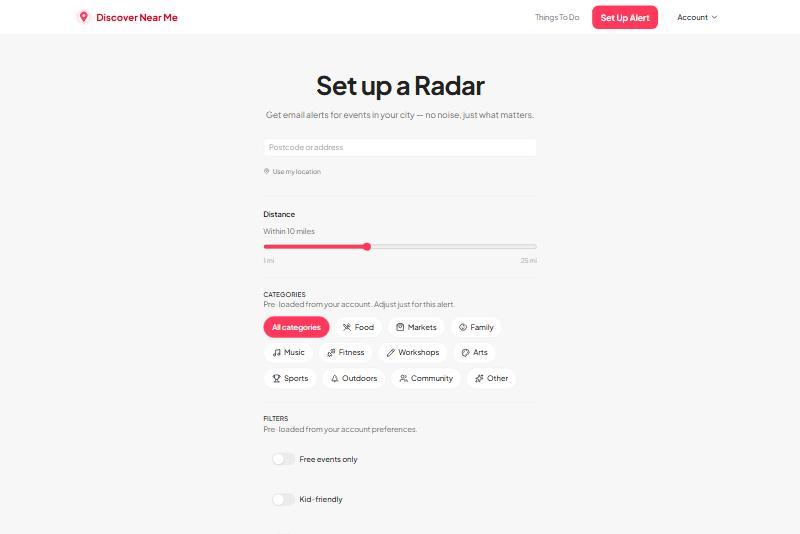
A Radar is a saved search that emails you what is coming up near you, either weekly on a Monday or monthly. Two deliberate choices sit in that form. It is free and needs no paid tier. And it expires: you choose one, three, six or twelve months up front, and then it stops. So an alert never outlives your interest in it.
The part nobody sees
Behind the simple answer sits the actual work: around sixty Cambridgeshire sources, published in every format there is.
Some venues offer a clean feed or a calendar file. Nineteen different adapter kinds handle those, and they are always preferred where a venue provides one. Most venues offer nothing but a web page built by whoever built the website, so those go through an extraction lane that reads the page and produces structured events, checked afterwards against the page's own text so that anything the model could not actually find there gets dropped rather than published.
The point of that lane is onboarding cost. Adding a source is one row: an id, the places it covers, a URL, and how often to look. Nothing is written per site, so a venue redesign breaks nothing. That keeps the catalogue able to grow without becoming a maintenance job.
Crawling other people's sites puts you on the other side of a relationship I care about, so it follows the etiquette I would want applied to mine: robots.txt respected, one request per second per host, conditional requests so an unchanged page costs the venue nothing, and a source that returns errors gets backed off rather than hammered.
The engineering, briefly
It is serverless end to end: AWS CDK, Lambda, DynamoDB, SQS, EventBridge and Bedrock behind a Next.js and React front end. Three decisions mattered more than the rest.
Radius search runs with no paid maps API on the read path: a radius becomes a set of geohash cells, each cell is one indexed query, and the exact distance filter happens after. Model extraction sits behind a hard daily spend ceiling that is deliberately small enough to actually bite, a cache so reading an unchanged page again is free, and a prefilter that strips a page to a tenth of its size before anything is sent. And the read path is sized for a full vCPU rather than the default, which made pages several times faster at roughly unchanged cost, because the price per millisecond went up by less than the duration went down.
The largest cost saving had nothing to do with AWS configuration at all. Commercial AI crawlers were taking close to half of all origin compute. Ten of them are now refused outright, while Google, Bing, Apple and the assistants that actually send people back are let through.
Where it stands
Discover Near Me is live and running in Cambridgeshire, deliberately before any marketing. Ingestion, deduplication, search, maps and alerts all work end to end, and the running cost is a few pounds a month. That last figure is the one that decides whether a product built by one person survives its first year.
Starting with Cambridgeshire is a deliberate choice. The expensive part of a new region is not the code, it is the sixty sources, and the ingestion design exists precisely so that adding them is data entry rather than development.